
You might think you can outrun sleep pressure with caffeine, but adenosine keeps building in your brain as wakefulness stretches, lowering cortical excitability. As day advances, homeostatic drive climbs even if you stay active, while circadian signals tilt toward rest and core temperature drops. External cues and mental demand modulate how urgent it feels, yet grogginess, slower reactions, and yawning surface as the mounting urge to sleep nears. So, what exactly drives this steady rise and how does it shape your performance later?
Key Points
- Wakefulness increases adenosine buildup, boosting sleep pressure as time awake grows.
- Circadian signals align with adenosine to intensify readiness for sleep near habitual bedtime.
- Morning has low adenosine, higher alertness; pressure accumulates and slows reaction times by afternoon.
- External cues and light affect sleep urgency; quiet, dim environments reveal sleep needs sooner.
- Caffeine blocks adenosine temporarily, aiding early-day performance but becoming less effective as pressure and circadian drift rise.
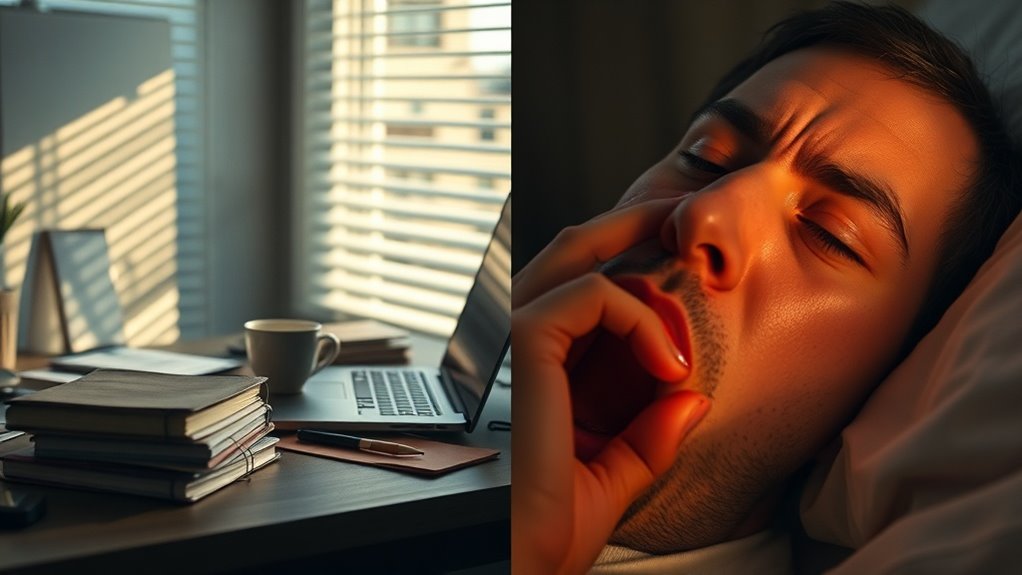
Sleep pressure, the homeostatic drive to sleep, rises systematically from wakefulness to habitual bedtime as adenosine accumulates and circadian signals shift toward rest. You experience a gradual increase in sleep propensity as brain adenosine concentrations build from waking activity, promoting neuronal inhibition and reduced cortical excitability. This buildup tracks time awake more than clock time, creating a biologically anchored gradient you move through as your day progresses.
Sleep pressure rises with wakefulness, guided by adenosine and circadian cues.
In the morning you start with relatively low adenosine accumulation, permitting higher alertness and efficient executive function. As you remain awake, adenosine receptors become progressively occupied, dampening thalamocortical transmission and slowing reaction times. By midafternoon, homeostatic pressure has increased sufficiently to influence performance even when you’ve had caffeine or a light chronotype-appropriate activity window. You may notice baseline yawning frequency climbs and micro-sleep intrusions become marginally more likely if you extend wakefulness without strategic behaviors to counterbalance.
Adenosine accumulation interacts with circadian phase, which you experience as a predictable daily rhythm of wakefulness and sleep propensity. Core body temperature declines toward the night window, promoting sleep onset readiness as melatonin is released in parallel with decreasing light exposure. This temporal alignment strengthens sleep pressure when you approach your habitual bedtime, creating a robust drive to transition from wake to sleep.
Your behavior can modulate how sleep cues are perceived. External stimuli, activities, and light exposure alter the perceived immediacy of sleep need. For example, sustained cognitive demand keeps cortical networks engaged, temporarily masking rising sleep pressure, while quiet, dim environments reveal the impending urge sooner. Sleep cues—subtle internal signals like grogginess, reduced vigilance, and slower reaction times—become more reliable indicators as adenosine continues to accumulate.
Caffeine timing presents a practical interaction with sleep pressure. Caffeine antagonizes adenosine receptors, transiently elevating perceived alertness and delaying sleep onset if consumed later in the day. To optimize subjective performance while maintaining a healthy sleep schedule, you should align caffeine timing with your objective tasks and circadian phase, avoiding late-evening doses that could suppress the homeostatic signal long enough to fragment sleep. Early-day caffeine supports working memory and sustained attention when sleep pressure remains modest, but its benefits diminish as adenosine levels climb and circadian signals shift toward rest.
Frequently Asked Questions
How Does Caffeine Affect Sleep Pressure Accumulation?
Caffeine blocks adenosine receptors and delays sleep pressure buildup, so you’re likely to experience later onset of sleep and reduced perceived sleepiness. Its half-life varies, but typical daytime intake can shift sleep onset by one to two hours and shorten total sleep by about 0.5–1.5 hours if consumed close to bedtime. You may notice diminished sleep recovery after night shifts or long days, especially with repeated doses; timing and total daily load matter most. Consider lighter caffeine use earlier in the day.
Can Naps Reset or Worsen Sleep Pressure?
Naps can reset some sleep pressure briefly, but they can also worsen it if you nap too long or too late in the day. You’ll likely feel relief for a short window, yet you may extend wake after sleep onset later. In data terms, short naps (20–30 minutes) tend to reset without substantial disruption; longer or late naps can increase total sleep pressure later. So, naps reset when brief; naps worsen when extended.
Does Exercise Timing Influence Daily Sleep Pressure Buildup?
Short answer: yes, exercise timing influences daily engagement with sleep pressure. When you schedule vigorous activity too late, you elevate cortisol and core temperature, accelerating daily sleep pressure buildup. Early or afternoon workouts tend to align with your circadian rhythms, supporting smoother sleep hygiene and calmer evening routines. Track how different timings affect your sleep latency and wakefulness, then tailor exercise timing to optimize daily engagement and preserve restorative sleep across the week. Prioritize consistent evening routines.
How Do Circadian Rhythms Interact With Sleep Pressure?
What’s the circadian interaction with sleep pressure? You experience a clock-driven modulation of wakefulness that interacts with homeostatic buildup, aligning alertness peaks and troughs to environmental cues. Your circadian rhythm biases the threshold for sleep onset, while homeostatic pressure rises with time awake, nudging you toward sleep. Together, they optimize timing. You’ll sleep best when schedules honor this balance, preserving circadian stability and reducing wake-after-sleep fragmentation.
What Role Do Stress and Anxiety Play in Sleep Pressure?
Stress and anxiety elevate sleep pressure by activating stress physiology pathways that increase arousal and cortical activity, delaying onset and shortening deep sleep. You may experience, with bedtime anxiety, heightened sympathetic output and cortisol, which counteract melatonin signaling and elevate REM pressure near your target sleep window. Chronic stress sustains this state, reducing sleep efficiency and increasing awakenings. Managing bedtime anxiety lowers these physiological responses, improving sleep onset latency and overall sleep architecture.