
You notice your mind replaying conversations at night because your brain tags unresolved exchanges with emotional salience, then rehearses potential responses as a safeguard against future costs. This shifts from deliberate to automatic processing, engaging the amygdala–hippocampus–prefrontal network when stress or fragmented sleep are present. The result can feel insightful yet distorted. Structured reflection and a calm wind‑down may convert loops into actionable insight, but the pattern often leaves you wondering what comes next.
Key Points
- Replays reflect recent exchanges and loop emotionally charged phrases, especially when stressed or fatigued.
- Night-time salience acts as adaptive rehearsal, tagging memories for future contingencies.
- Sleep shifts from deliberate to automatic processing, allowing emotional memories to consolidate and surface.
- Fragmented sleep intensifies memory salience, increasing loop frequency and persistence.
- Therapeutic framing can transform loops into constructive rehearsal with structured, actionable review.
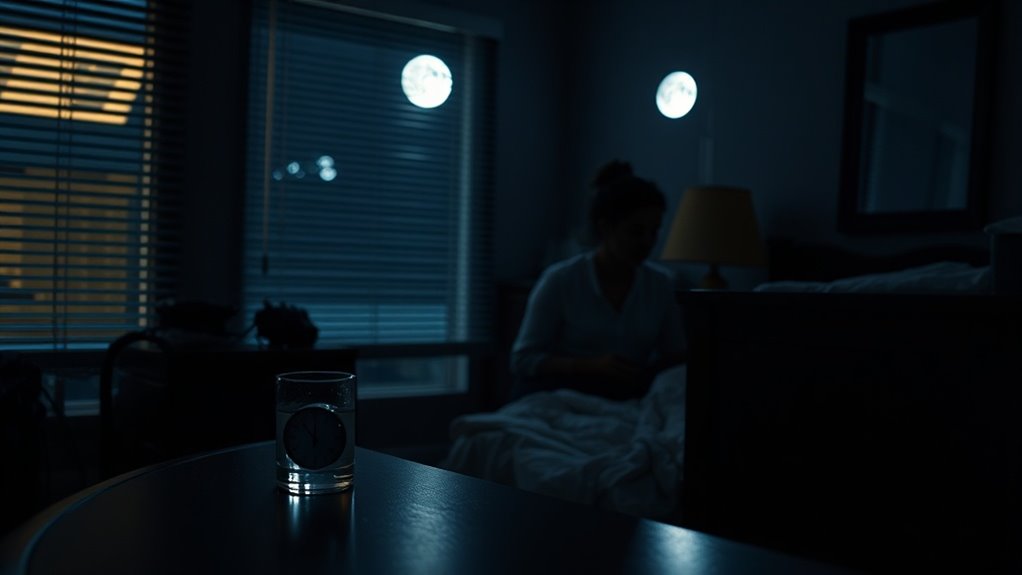
Ever wondered why your mind replays conversations at night? In the pattern you’re experiencing, the brain revisits recent exchanges, often looping specific phrases or questions. This isn’t random; it reflects how memory systems, stress responses, and cognitive control interact during low-light, low-distraction states. You’ll notice the loop tends to intensify when you’re physically tired, anxious about unresolved issues, or about to face a forthcoming interaction. From a diagnostic lens, this activity can be viewed as an adaptive rehearsal mechanism dressed in night-time salience, designed to test responses and prepare for future contingencies. The behavior aligns with established models of rumination patterns, where repetitive activation of threat-related or emotionally charged content keeps neural circuits primed for potential challenges.
Sleep psychology offers a structured framework to interpret this phenomenon. During late-evening processing, you shift from deliberate, goal-directed thought to more automatic, limbic-influenced activity. The brain transitions through stages that permit emotional tagging and consolidation, which can unintentionally surface conversations you had earlier in the day. If you’ve encountered conflict or ambiguity, these memory traces become more accessible, and the nocturnal replay can function as a diagnostic probe: you’re testing how you’d respond if the situation arose again. The neural correlates involve interactions among the amygdala, hippocampus, and prefrontal cortex, with quality of sleep modulating the strength and frequency of replays. When sleep is fragmented, you may experience heightened salience of these memories, reinforcing loops rather than resolving them.
Your cognitive system uses this replay to reduce future error costs, but the effect hinges on interpretive omission or distortion. If you engage with the content therapeutically, you can transform the loop into a constructive rehearsal. Approach it with a brief, structured review: identify the trigger, name the emotion, note the action you would take, and close with a concise, realistic appraisal of outcome likelihood. This method aligns with evidence-based approaches to managing rumination patterns, grounding you in actionable steps rather than unproductive rumination. Practical adjustments improve sleep psychology outcomes: maintain a consistent bedtime, limit stimulants, and establish a wind-down routine that minimizes late-night cognitive overload. If the mind persists in looping, you can redirect attention with a brief, neutral task near bedtime to reduce emotional charge, thereby improving sleep continuity and decreasing loop frequency.
Frequently Asked Questions
Do Dreams Reveal Hidden Personality Traits?
Dreams don’t reveal hidden personality traits in a fixed, diagnostic way. Instead, you interpret dream symbolism to gain clues about recent experiences and emotional priorities. You might notice themes reflecting memory consolidation processes, as daytime memories stabilize during sleep. Rather than discovering rigid traits, you’re observing fluctuations in mood, values, and coping styles. Keep notes, compare patterns, and avoid overinterpreting single scenes; a broader pattern suggests more about your adaptive tendencies than absolute traits.
Can Replayed Chats Predict Future Outcomes?
Yes, replayed chats can hint at possible outcomes, but they don’t reliably predict them. In sleep psychology, dreams and memory integration show that nightly rehearsals reflect current concerns and cognitive biases, not fate. You might glean patterns, priorities, or tensions, yet extrapolating future events from past conversations is inherently uncertain. Use these replays as diagnostic cues for decision bias and information gaps, not deterministic forecasts.
Are All Night Thoughts Caused by Stress?
Not all night thoughts are caused by stress. You may experience night anxiety even when stress isn’t present, or you can have spontaneous rumination unrelated to emotional strain. In some individuals, darkness and quiet amplify memory consolidation processes, shaping what surfaces as problem- or social-oriented thoughts. You might notice patterns tied to prior experiences. Consider sleep quality, arousal levels, and cortisol timing to evaluate whether these thoughts reflect night anxiety or benign memory consolidation.
How Long Do These Conversations Typically Last?
Conversations typically last a few seconds to several minutes, though segments may recur in cycles. You may experience brief reflection loops that repeat phrases or outcomes, extending the perceived duration. Memory consolidation processes during sleep influence timing, with longer, emotionally salient exchanges sometimes dragging on. In diagnostic terms, expect most episodes to resolve quickly, but certain thoughts can linger, reinforcing recent interactions. If prolonged, consider stress reduction and sleep hygiene to normalize these reflection loops.
Should I Journal to Stop the Replays?
Yes, journaling can help reduce night replays. You should try it as part of a practical routine. Journaling benefits include organizing thoughts, identifying triggers, and tracking patterns over time, which improves awareness and control. Start with a brief, consistent window before bed, jotting what you recall and your emotions. Pair journaling with practical routines like wind-downs and breathing. If episodes persist, consult a professional for diagnostic evaluation and tailored strategies.