
You can start with a fixed wake time and work backward to a realistic bedtime, then build a calming 30–60 minute pre-sleep ritual. Keep your sleep space cool, dark, and quiet, and dial down blue light and stimulants in the evening. Avoid late meals and intense workouts close to bed, and limit naps. Track your progress to reinforce consistency and notice how small changes compound—a simple shift today can reshape how you wake tomorrow. Ready to try the first step?
Key Points
- Align your bedtime with natural light cues and keep a fixed wake time, even on weekends, to strengthen circadian entrainment.
- Establish a calming 30–60 minute pre-sleep routine with a consistent sequence and low-stimulation activities.
- Create a cool, dark, quiet sleep environment and reserve the bed for sleep and intimacy only.
- Reduce blue light in the hour before bed, use dim lighting or amber eyewear, and limit bright screens.
- Exercise earlier in the day, limit late workouts and naps, and practice brief relaxation techniques to lower hyperarousal.
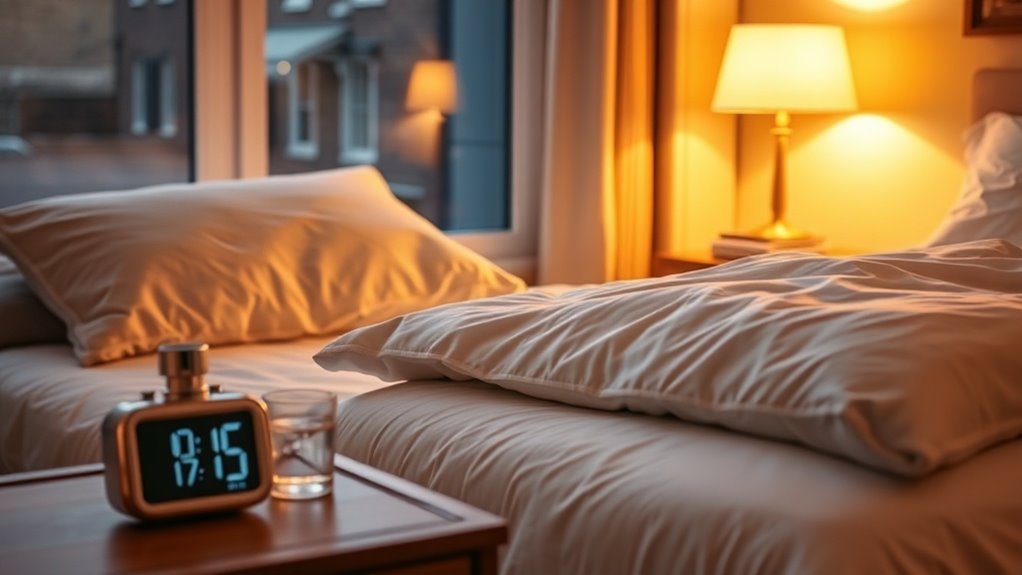
Getting better sleep starts with small, evidence-based changes you can start today. You’ll learn how simple adjustments can create measurable improvements in sleep quality and daytime alertness. The evidence base shows that consistency matters, and you can harness that by shaping your sleep routine around reliable cues. Start by aligning your bedtime with your natural lights and darks, then reinforce that alignment with predictable pre-sleep activities. Your circadian cues respond to routine, so deliberately exposing yourself to bright light in the morning and avoiding bright screens after dusk helps synchronize the body’s clock.
Align bedtime with natural light cues and establish a consistent, calming pre-sleep routine.
A practical approach is to set a fixed wake time, even on weekends, and work backward to establish a realistic bedtime. This regularity strengthens circadian entrainment and reduces nocturnal awakenings. If you struggle to fall asleep, limit stimulant use and heavy meals late in the day. Consider a light, calming routine 30 to 60 minutes before bed, such as dimming lights, gentle stretching, or reading a non-stimulating book. The key is consistency: the same sequence, same lighting, same activities, each night. Your sleep routine should be signaling to your brain that rest is coming, not a chance for new stimulation.
Environment matters too. Keep your sleep space cool, dark, and quiet, optimizing for comfort and minimal interruptions. Use the bed only for sleep and intimate activities to strengthen the association between bed and rest. If noise is unavoidable, white noise or earplugs can reduce disruptive awakenings without introducing new distractions. Invest in a comfortable mattress and pillows that support healthy alignment, because physical comfort facilitates both sleep initiation and maintenance. Limit napping to short, early interventions if you must nap, and avoid long daytime naps that can shift circadian cues away from your night schedule.
Digital hygiene is essential. In the hour before bed, reduce exposure to blue light from screens and consider amber-tinted eyewear or built-in night modes. This helps prevent delayed melatonin release and makes sleep onset smoother. If you must use devices, keep brightness low and notifications off to minimize arousal. Exercise is beneficial, but timing matters; vigorous workouts late in the day can delay sleep onset, so aim for moderate activity earlier in the day and finish intense sessions at least a few hours before bedtime.
You’ll track progress by noting sleep onset latency, awakenings, and perceived restfulness. Small, consistent gains accumulate: a 10-minute advance in bedtime here, a nightly wind-down ritual there. By honoring your sleep routine and respecting circadian cues, you create a dependable rhythm that supports restorative sleep and clearer mornings. If stress arises, incorporate brief relaxation techniques during the wind-down period to reduce hyperarousal without extending the bedtime window excessively. Keep adjustments incremental and monitor how changes influence both sleep quality and daytime functioning.
Frequently Asked Questions
How Long Should a Nap Last for Optimum Sleep Impact?
“Time is money,” and naps follow that logic. For optimum sleep impact, aim for a 10- to 20-minute nap, which boosts alertness and performance without causing grogginess or sleep inertia. If you need deeper restoration, a 90-minute nap spans a full sleep cycle and can improve creativity and memory. Avoid longer naps late in the day. Nap duration matters; shorter resets, longer cycles for specific goals.
Do Evening Workouts Hinder or Help Falling Asleep?
Evening workouts can help your sleep overall, but timing matters for sleep onset. If you finish workouts at least 2–3 hours before bed, you’re more likely to fall asleep quickly and enjoy deeper sleep. Intense late sessions may delay sleep onset due to elevated core temperature and adrenaline. Opt for moderate, lighter activity closer to bedtime if needed, and pair with a wind-down routine. Track how your body responds and adjust to optimize sleep onset.
Is Caffeine Safe if I Have Trouble Sleeping?
Caffeine safety for you hinges on caffeine sensitivity and sleep onset; if you’re caffeine sensitive, it’s best to avoid it in the hours before bed. You might notice longer sleep onset and lighter sleep. Consider smaller doses earlier in the day, or switch to decaf. If sleep issues persist, track timing, and consult a clinician. You’ll likely improve sleep by limiting caffeine after mid-afternoon and favoring relaxing routines in the evening.
Can Late Meals Affect Sleep Quality or Duration?
Late meals can affect sleep quality by disturbing your circadian rhythm and delaying bedtime. Meal timing matters: heavy or spicy foods close to bed can cause reflux or jitteriness, while light, balanced meals earlier in the evening support sleep. Aim for consistent timing, ideally 2–3 hours before bed, and keep late meals modest. If you must eat late, choose protein-rich, light options and monitor how it impacts your sleep quality and next-day wakefulness.
Should I Use Alarm Clocks for Better Sleep Health?
Using alarm clocks isn’t essential for better sleep health, but they can help when you lack sleep autonomy. If you rely on them, you might reduce morning awakenings and rebalance rhythms. Acknowledge that tracking devices can improve awareness, yet you should still honor natural cues. Focus on consistency, not forced wakeups. You’ll gain clearer mornings only if you pair alarms with a stable sleep window, avoiding late-night disruptions to protect overall sleep quality.