
Evening screen time shifts your body’s natural calm by blue-enriched light that suppresses melatonin, delaying sleep onset and nudging your circadian clock later. The glow, plus interactive content and alerts, keeps your brain alert rather than relaxed. As sleep becomes lighter with less restorative deep sleep, you wake unrefreshed and tired the next day. You’ll find practical steps—earlier cutoffs, warmer light, calmer activities, and mindful breathing—can help, but the question remains: how will you start implementing them tonight?
Key Points
- Blue-enriched light from screens suppresses melatonin, delaying sleep onset and shifting the circadian phase later.
- Interactive content and notifications keep the mind aroused, hindering the calm transition to sleep.
- Reduced deep sleep and memory consolidation lead to morning grogginess and daytime fatigue.
- Pre-sleep cognitive load and sympathetic activation undermine parasympathetic-driven relaxation.
- Practical changes (earlier cutoff, warmer lighting, and calmer activities) restore calm and improve sleep quality.
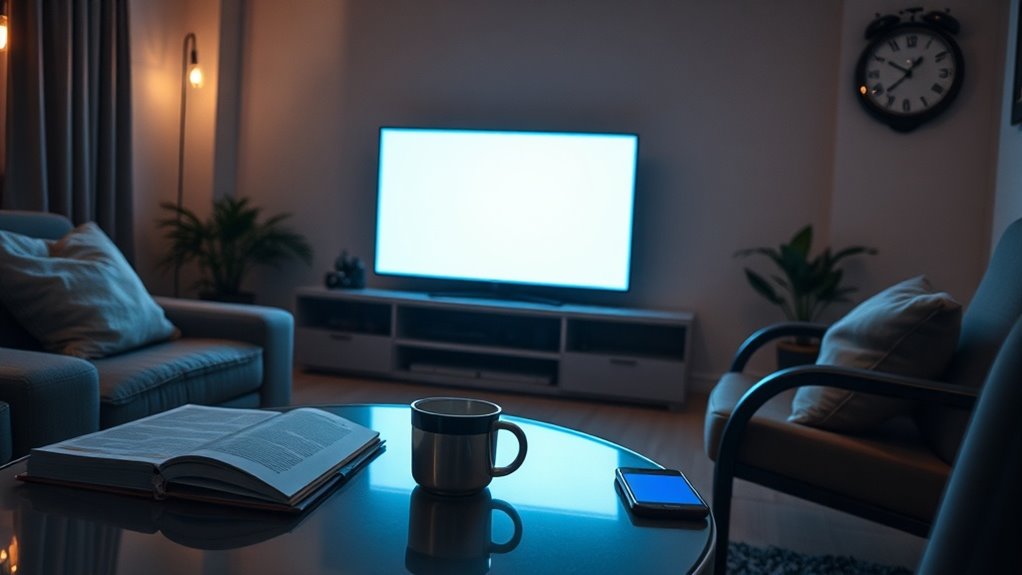
Evening screen time can quietly derail your body’s natural calm. When you use devices after sunset, you expose yourself to blue-enriched light that suppresses melatonin, a hormone that signals sleep. This shift can delay sleep onset and reduce the overall quality of rest you achieve. In clinical terms, delayed circadian phase and lighter sleep architecture undermine restorative processes, including memory consolidation and hormonal balance. You may notice easier arousal and shorter deep sleep bouts, leading to morning grogginess and daytime sleepiness that perpetuate a cycle of reliance on caffeine or stimulants. The mechanism is not solely light; interactive content and notifications trigger cognitive and emotional engagement, maintaining sympathetic activation beyond the time you intend to wind down. The result is a state of physiological hyperarousal that conflicts with the body’s need for parasympathetic predominance during pre-sleep minutes.
Evening screen time delays sleep by suppressing melatonin and increasing arousal.
To mitigate these effects, you should establish practical routines that preserve nightly calm. Begin with digital boundaries: set a fixed cutoff time for screens, ideally 1–2 hours before planned bedtime, and physically separate devices from the sleeping area. Use ambient lighting and warmer color temperatures in the hours leading up to rest to lessen blue-light exposure. These steps reduce circadian disruption and support melatonin secretion, aligning your physiology with a smoother transition to sleep. You can further dampen arousal by restructuring pre-sleep activities toward passive, low-stimulation tasks such as light reading or gentle stretching. This shift minimizes cognitive load and helps you arrive at sleep with a calmer cognitive baseline.
Mindful breathing becomes a concrete tool within your evening routine. Practice a short, structured sequence: inhale for four counts, hold for four, exhale for six, repeating for several minutes. This pattern fosters parasympathetic engagement and reduces heart rate variability associated with last-minute device use. Consistency matters: daily practice reinforces a calmer autonomic state, making it easier to fall asleep and stay asleep. If you notice persistent wakefulness, pair mindful breathing with a brief body scan to identify areas of tension and invite relaxation into the muscles of the neck, shoulders, and jaw. By tuning into your bodily signals rather than scrolling for distraction, you reframe evening behavior toward restoration.
Evidence supports these interventions as part of a broader sleep hygiene approach. Reducing light exposure, delaying interactive content, and cultivating calm-morning expectations improve sleep onset latency and subjective sleep quality. You should track your progression with a simple nightly log, noting bedtime, screen cutoff time, and perceived sleep quality. If sleep problems persist beyond several weeks, consulting a clinician can help rule out comorbid conditions like insomnia or sleep apnea. Ultimately, your goal is to protect the natural calm your body seeks at night, leveraging digital boundaries and mindful breathing to restore healthier sleep dynamics.
Frequently Asked Questions
How Quickly Can Screen Time Affect Sleep Quality?
Screen time can begin affecting sleep quality within as little as 30 to 60 minutes, often delaying sleep onset. You may notice quicker sleep onset? Actually, delays occur with blue‑light exposure and arousal. The impact includes circadian shift, reducing melatonin and delaying REM. In practical terms, limit screens at least an hour before bed, use dim lighting, and employ blue-light filters. You’ll likely improve sleep efficiency, sleep onset latency, and overall sleep quality with consistent prebed routines.
Do Blue Light Glasses Really Help With Evening Screens?
Yes, blue light glasses can help with evening screens. They filter blue wavelengths, reducing exposure that can delay melatonin and nudge your circadian clock. In practice, you’ll notice easier wind-down and steadier sleep onset when you use them consistently in the hours before bed. Use them alongside good sleep strategies: dim lights, limit screens, and keep your bedtime routine regular. For most people, grit and routine matter as much as gear. blue light, evening screens.
Can I Reverse the Effects After Screen Time Ends?
Yes, you can reverse effects after screen time ends. Engage in post screen recovery: dim lights, avoid further screens for at least 60 minutes, and practice gentle breathing or mindfulness. Maintain consistent sleep-wake times, and strengthen sleep hygiene. Limiting evening caffeine, exercising earlier, and using blue-light filters during the day support recovery. If sleep continues to be disrupted, consider cognitive-behavioral strategies or consult a clinician for personalized guidance. Evidence supports gradual, targeted adjustments to restore circadian rhythm.
Are There Natural Remedies That Counter Nighttime Sleep Disruption?
Natural remedies can help; they’re not instant fixes but may reduce sleep disruption when used consistently. Prioritize sleep hygiene: maintain a regular schedule, dim lights an hour before bed, and limit caffeine late in the day. Consider evidence-based options like magnesium, melatonin under clinician guidance, and cognitive behavioral strategies for insomnia. Avoid screens before bed, use blue-light filters, and create a calm pre-sleep routine. If problems persist, consult a clinician for personalized evaluation.
What App Settings Reduce Evening Screen Impact Effectively?
Short answer: enable evening brightness reduction and use App timers. Turn on blue light filtering, enable a low-contrast screen, and schedule bedtime or limit hours in the app. Set stricter app timers for social media and video apps, and enable system-wide night mode well before sleep. Evidence supports reduced melatonin suppression and quicker sleep onset with these settings. You’ll likely notice calmer physiology and easier transitions to sleep when you stick with these adjustments.