
Imagine you’ve tried counting sheep for 20 minutes and still can’t shut off the day’s noise. You’re not alone, and there are effective natural options beyond melatonin: herbal blends with valerian, hops, chamomile, and passionflower may modestly shorten sleep onset; L-theanine can ease arousal; magnesium helps if your intake is low or you have restless legs. Pair these with solid sleep hygiene—consistent light exposure, daytime activity, and a calm pre-sleep routine—for a steadier drift, and you’ll see what nuanced adjustments can offer.
Key Points
- Herbal blends (valerian, hops, chamomile, passionflower) may modestly reduce sleep onset latency; choose standardized formulations and watch for grogginess.
- GABAergic/anti-anxiety supplements like L-theanine can promote relaxation without strong sedation; start low and monitor effects.
- Magnesium can improve sleep fragmentation or restless legs, especially with low intake; consult clinician if on meds or with kidney issues.
- Non-ingestible aids such as mindfulness, daytime light management, and regular exercise can support quicker sleep onset.
- Sleep hygiene basics (consistent bed/wake times, dark cool environment, limit screens, avoid caffeine/alcohol near bedtime) often boost non-melatonin sleep; track effects.
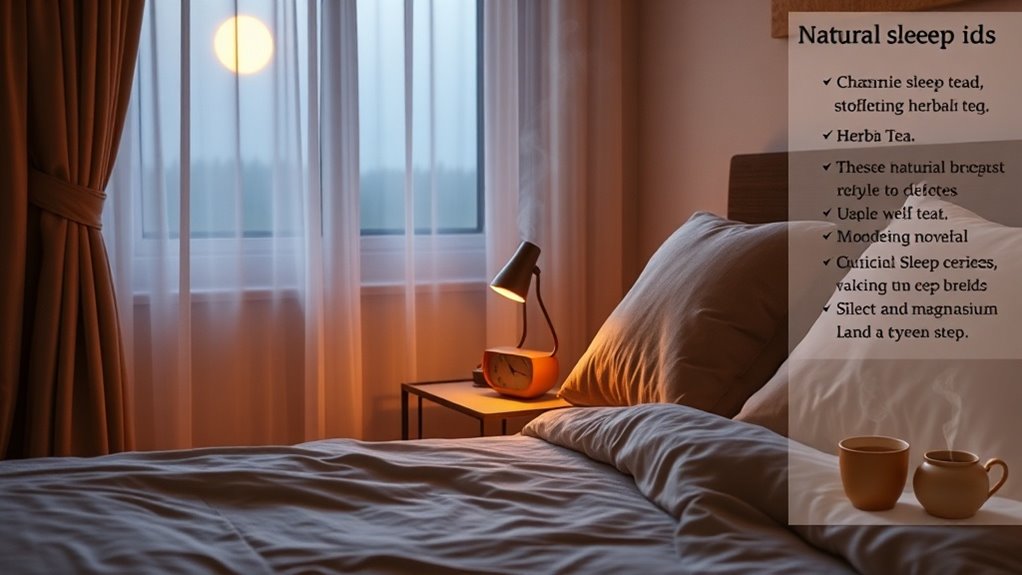
If you’re looking for sleep aids beyond melatonin, you’re not alone in seeking safer, non-prescription options. You’ll find that some options have modest, clinically supported effects and lower risk when used responsibly. Your goal is to improve sleep quality and duration without relying on prescription drugs, and that starts with solid habits and careful ingredient choices.
First, focus on sleep hygiene as the foundation. Regular bed and wake times reinforce circadian rhythms, and a consistent schedule reduces awakenings. Create a calming pre-sleep routine, limit exposure to bright screens in the hour before bed, and keep the bedroom cool, dark, and quiet. Caffeine and alcohol near bedtime can disrupt sleep cycles, so moderating intake helps sustain restorative stages. If you track patterns, you may notice that small changes yield meaningful gains, especially when combined with other strategies.
Prioritize sleep hygiene: consistent schedules, calming routines, and a cool, dark, quiet bedroom.
Beyond routine, a few non-prescription options show promise in improving sleep onset or latency. Herbal blends often combine sedative- and anxiolytic-leaning ingredients with a favorable safety profile when used short term. Valerian, hops, chamomile, and passionflower appear in many blends. While evidence varies by preparation and dose, some studies report modest reductions in sleep onset latency and improved subjective sleep quality. You might experiment with a standardized herbal blend that emphasizes consistent potency and quality, and discontinue if you experience grogginess or daytime impairment. It’s wise to avoid mixes with high caffeine or stimulant components, and to follow product labels for timing and dose.
GABAergic or anti-anxiety–modulating supplements, such as l-theanine or magnesium, are popular for sleep support. Magnesium may help some individuals with sleep fragmentation or restless legs, particularly if dietary intake is low. L-theanine can promote relaxation without sedation for some people, but effects are modest and more pronounced when stress contributes to sleep difficulty. If you try these, start at low, labeled doses and monitor daytime alertness and digestion. If you take medications or have kidney issues, consult a clinician before adding magnesium, as excess can cause complications.
Consider non-ingestible aids that synergize with what you already do. Mindfulness, light exposure management during the day, and physical activity earlier rather than later can lower arousal and help you fall asleep faster. If your environment supports quiet, an essential oil diffuser with calming scents may help, but avoid strong fragrances that could irritate you or others.
Frequently Asked Questions
Do Natural Sleep Aids Interact With Common Medications?
Yes, natural sleep aids can interact with common medications. Natural interactions exist, and timing matters, so you should consider Medication timing when combining remedies with prescribed drugs. For example, valerian, chamomile, or passionflower may amplify sedatives or antidepressants, while melatonin isn’t the only concern. Always check with a clinician about possible interactions, especially with anticoagulants, anticonvulsants, or thyroid meds. Start with low doses, monitor effects, and adjust timing to minimize risks.
How Quickly Do Non-Melatonin Aids Work?
Non-melatonin aids vary, but typically they take effect within 30 minutes to a few hours, depending on the ingredient and your sleep pattern. You should consider how quickly you need relief, and note interactions with meds. Choose vegan/allergen free options whenever possible, and be mindful of kids safety. Be aware of morning grogginess or headaches as possible side effects, which can influence how quickly you perceive benefit. If symptoms persist, consult a clinician.
Are Supplements Vegan or Allergen-Free?
Yes, many sleep supplements can be vegan and allergen-free, but you need to check labels carefully. Look for vegan-certified and allergen-safe claims, and review ingredients for dairy, gluten, soy, nuts, or shellfish. Opt for reputable brands with third-party testing. If you’re vegan sleep-conscious, prioritize products with simple formulas and clear allergen statements. Always consult a clinician if you have sensitivities or take other meds to ensure compatibility and safety.
Can Kids Use Non-Melatonin Sleep Aids Safely?
Short answer: kids safety is paramount, and non-melatonin sleep aids aren’t routinely recommended for children without medical supervision. If considered, you should consult a pediatrician first. Use non melatonin dosing only as directed by a clinician, and monitor for side effects like daytime grogginess or digestive issues. Avoid herbal products with unclear dosing or potential interactions. Emphasize sleep hygiene, consistent routines, and addressing underlying causes to support safe, effective use.
Do These Aids Cause Morning Grogginess or Headaches?
Yes, some natural sleep aids can cause morning grogginess or headaches, though effects vary by person. With options like valerian, chamomile, or magnesium, you may notice mild grogginess less often than with prescription meds, but headaches can occur if doses are too high or taken too late. Start low, monitor how you feel, and avoid daytime driving after first tries. If symptoms persist, consult a clinician and consider sleep hygiene strategies alongside natural sleep aids.